

✛ Blog · Packaging
Sustainable Packaging Without the Price Tag
Going green doesn't have to mean going over budget. Here's how to choose cosmetic packaging that's genuinely sustainable — and still commercially competitive.
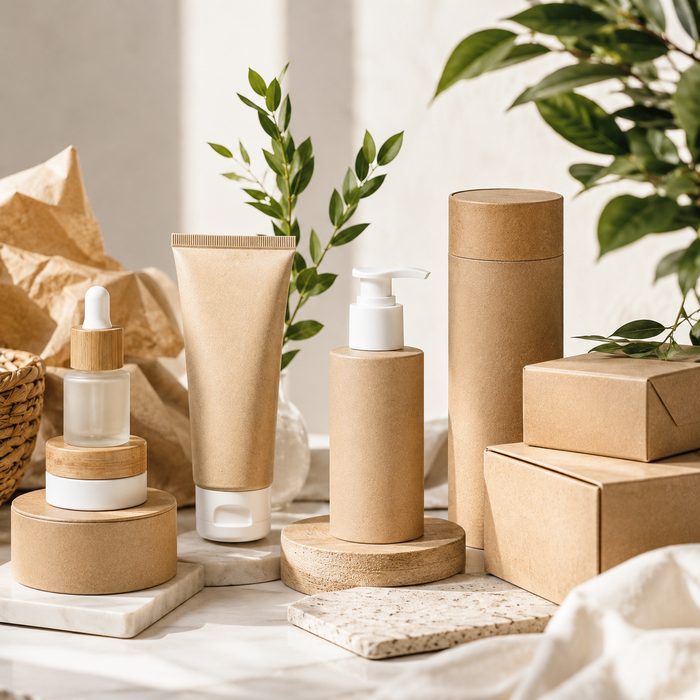
Sustainability has become one of the biggest trends in the beauty industry. Today's consumers are paying closer attention not only to the ingredients inside their skincare and hair care products but also to the packaging that surrounds them. In fact, sustainable packaging has moved from a nice-to-have to a baseline expectation — the beauty industry now generates over 120 billion packaging units annually, and regulators in the EU, UK, and parts of the US are increasingly treating vague "eco-friendly" claims without certification as greenwashing.
Many brand owners assume that switching to sustainable packaging means significantly higher costs. In reality, it doesn't always have to be expensive. With the right strategy and manufacturing partner, you can make environmentally conscious choices while keeping your product commercially competitive. In this guide, TX Labs shares practical ways to choose sustainable cosmetic packaging without overpaying.
Why Sustainable Packaging Matters
Consumers are increasingly looking for brands that demonstrate environmental responsibility. Sustainable packaging can help reduce waste, improve your brand image, and appeal to environmentally conscious customers. The benefits include:
- Stronger brand credibility
- Increased consumer trust
- Reduced environmental impact
- Better appeal to younger, eco-conscious buyers
- Support for long-term sustainability goals
However, choosing sustainable packaging should also make business sense. The goal is to balance environmental responsibility with product protection, functionality, and cost.
Nielsen's Global Responsibility Report found that 46% of consumers are willing to pay more for products from sustainable brands — meaning smart packaging choices can support your pricing, not just your conscience.
Sustainable Doesn't Always Mean Expensive
One of the biggest misconceptions is that every eco-friendly packaging option comes with a premium price tag. The truth is that cost depends on several factors, including material selection, packaging design, order quantity, supplier availability, manufacturing process, and shipping efficiency. Making informed choices can often reduce costs while still improving sustainability.
Choose Recyclable Materials
One of the simplest ways to make your packaging more sustainable is by selecting materials that are widely recyclable. Popular options include:
- PET bottles
- HDPE bottles
- Glass containers
- Aluminium tubes
- Paperboard cartons from responsibly managed sources
These materials are commonly accepted by recycling systems in many markets, making them practical choices for both brands and consumers.
Avoid Over-Packaging
Luxury packaging doesn't always require multiple layers. Many cosmetic products are packaged with unnecessary outer boxes, plastic inserts, or decorative components that add cost without improving the customer experience. Instead, consider simplified carton designs, minimal plastic inserts, compact packaging, right-sized containers, and multi-purpose packaging. Reducing excess packaging can lower material costs while reducing waste.
Select the Right Packaging Size
Choosing packaging that closely matches your product volume helps minimise wasted materials. For example, filling a small amount of serum into a much larger bottle not only creates a poor customer experience but also increases packaging costs. Optimising bottle size can improve both sustainability and shipping efficiency.
Consider PCR (Post-Consumer Recycled) Materials
Many cosmetic packaging suppliers now offer containers made with Post-Consumer Recycled (PCR) plastic. PCR packaging gives existing plastic materials a second life, reducing demand for virgin plastic while maintaining functionality. Depending on the supplier and order quantity, PCR packaging can often be incorporated without dramatically increasing costs — and increasingly, brands are pairing PCR claims with third-party certification such as the Global Recycled Standard (GRS) to keep sustainability claims verifiable rather than just marketing language.
Balance Premium Design With Practicality
Beautiful packaging attracts customers, but every premium feature adds cost. Examples include metallic finishes, heavy glass bottles, complex moulds, magnetic closures, and multi-layer printing. Instead of including every premium feature, focus on one or two distinctive design elements that reflect your brand while keeping the overall packaging practical and cost-effective.
Plan Packaging Early
Many businesses choose packaging at the end of product development. This can limit options and increase costs. By discussing packaging requirements early with your OEM or ODM manufacturer, you can compare different packaging materials, evaluate supplier options, improve compatibility with the formulation, avoid costly redesigns, and reduce production delays. Early planning often leads to better pricing and a smoother product launch.
Questions to Ask Before Choosing Cosmetic Packaging
- Is this packaging recyclable in my target market?
- Does the packaging protect my formulation effectively?
- Is there a recycled material option available?
- Can I reduce unnecessary packaging components?
- Will the packaging increase shipping costs?
- Does the design align with my brand positioning?
- Will customers perceive value without excessive packaging?
How TX Labs Helps Beauty Brands Make Smarter Packaging Choices
At TX Labs, packaging is considered from the earliest stages of product development. Our team works closely with clients to recommend packaging solutions that complement the formulation, reflect the brand identity, and support commercial success. Whether you're developing a private label product or a fully customised skincare or hair care range, we help you evaluate packaging options based on functionality, appearance, sustainability, and cost.
By working with trusted packaging suppliers and integrating packaging planning into our OEM and ODM process, we help brands achieve high-quality results without unnecessary expenditure.
Final Thoughts
Sustainable cosmetic packaging is no longer reserved for large international brands. With careful planning, thoughtful material selection, and expert guidance, businesses of every size can adopt more environmentally responsible packaging without significantly increasing costs. The key is to focus on practical improvements rather than expensive trends — choosing recyclable materials, reducing unnecessary packaging, optimising packaging sizes, and planning early can all contribute to a more sustainable and commercially successful product.
✛ Frequently Asked Questions
Quick Answers
Is PCR packaging more expensive than virgin plastic?
Not always — cost depends on supplier, order quantity, and format. In many cases PCR can be incorporated without a significant price increase.
What packaging materials are easiest to recycle?
PET and HDPE bottles, glass, aluminium, and responsibly sourced paperboard are widely accepted across most recycling systems.
When should I start planning packaging in my product development?
As early as possible — ideally alongside formulation, so packaging compatibility, supplier options, and cost are factored in before designs are finalised.
Ready to Start Your Project?
Talk to our team about your product idea, timeline, and budget — we'll help you map the right path forward.
Contact TX Labs WhatsApp UsFOR FASTER RESPONSE